


Food Aversion After Bariatric Surgery: Causes and Treatment
Food aversion after bariatric surgery refers to a strong dislike, avoidance, or “can’t stand” reaction to specific foods. This includes intense negative reactions to the food’s texture, smell, or appearance. After bariatric surgery, many patients experience food aversion as they adjust to new diet and lifestyle. Without timely specialized medical care, you may develop nutritional deficiencies and other gut health complications.
In this blog post, we discuss what food aversion is, its causes, and the available treatment or prevention options.
What is Food Aversion?
Food aversion is a strong negative reaction to a specific food. After bariatric surgery, this reaction is especially common for specific food categories like sweets, red meat, bread/pasta, or dairy. The reaction, which can range from mild dislike to severe avoidance limits dietary variety and, in some cases, contributes to inadequate protein or micronutrient intake.
Generally, our eating behavior is shaped by a combination of physiological, psychological, and environmental factors.
- Physiological aspects include hunger and satiety hormones as well as overall energy requirements.
- Psychological factors involve the brain’s response to taste, smell, and the emotional connections we form with specific foods or even the brain’s response to food as a reward.
- Environmental factors cover social influences, such as eating at gatherings, as well as the availability, accessibility, and cultural norms that dictate what we choose to eat.
After bariatric surgery, the physiology of your stomach changes significantly. Your stomach now has limited space for food, you feel full early, and the hunger hormone levels drop. Further, the new gut microbiome ( a vast community of trillions of microorganisms like bacteria, fungi, and viruses, living primarily inside your large intestine.) modulate gut–brain signaling and taste preferences.
Many patients report increased sensitivity to sweet and fatty tastes, which often makes previously palatable foods taste “too sweet,” “too rich,” or unpleasant. For example, if you enjoyed chicken earlier, you can’t stand the smell of it now. Such taste and smell alterations often emerge within the first 6 months, and for many, these symptoms may persist at a lower intensity long term.
Causes of Food Aversion
The existing medical literature highlights that food aversion is a result of multiple interconnected phenomenons. The following are the major causes:
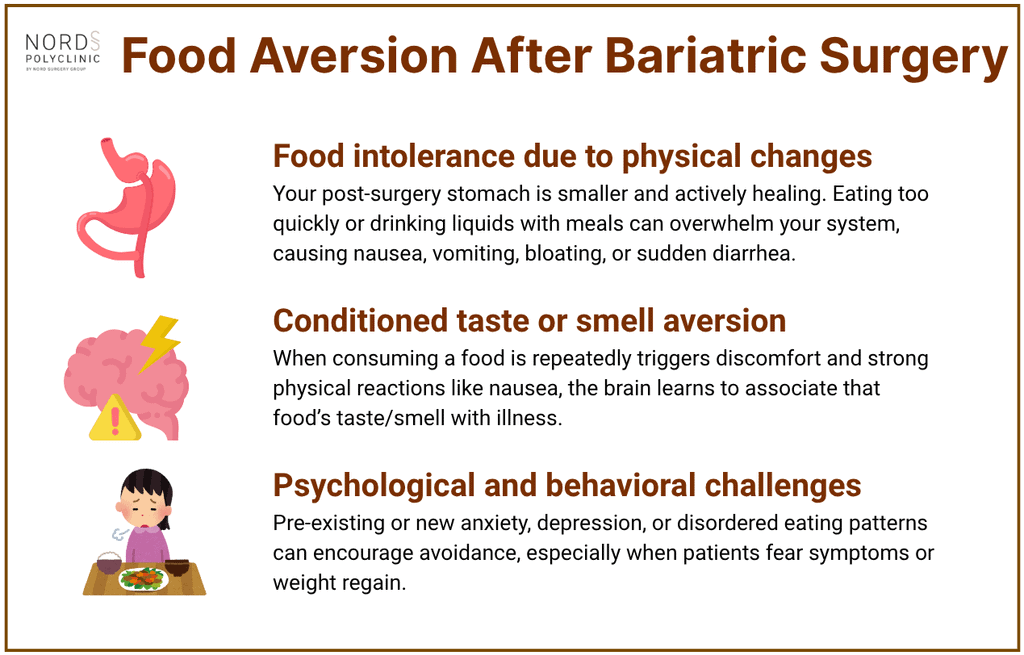
- Food intolerance due to physical changes
Your stomach is still healing after surgery. Its capacity is reduced, the surgical sutures are recovering, and medications can alter your gut environment.
Consuming food too quickly or drinking liquids with your meals can overwhelm your stomach, triggering symptoms like nausea, vomiting, a feeling of food getting “stuck,” bloating, or sudden diarrhea. This is particularly common with:
- high-sugar and high-fat foods, which commonly provoke dumping syndrome.
- tough proteins and dry carbohydrates that can cause “sticking” or vomiting during the early recovery phase.
- Conditioned taste or smell aversion
Your food preferences are shaped by learning from previous experience by your brain. When consuming a food repeatedly triggers discomfort and strong physical reactions like nausea, the brain learns to associate that food’s taste/smell with illness. Here, the intensity and frequency of physical reaction shapes your future interaction with that specific food. While some aversion can be mild others can be moderate to severe. - Psychological and behavioral factors
Pre‑existing or new anxiety, depression, or disordered eating patterns can encourage avoidance, especially when patients fear symptoms or weight regain. This is why psychological preparation before bariatric surgery is a core component of our bariatric care. It helps address several behavioral challenges and improve post-surgery outcomes.
Food aversion is a serious concern when it:
- Reduces protein, iron, B12, calcium, or overall energy intake, which increases risk of malnutrition or excessive weight loss.
- Narrows dietary variety so much that patients rely on a few “safe” foods, often low in nutrients.
- Co‑exists with problematic eating behaviors or eating disorders, which are linked to worse surgical outcomes.
Treatment and Management Strategies
If you experience food aversion, consult your bariatric surgeon immediately. They will suggest a thorough medical evaluation, which helps identify the reason for aversion. Based on the cause for aversion, you will be referred to the appropriate specialist to help manage your symptoms and support your recovery.
The most common advice includes:
1. Developing nutritional and behavioral strategies
If the primary reasons for aversion are eating behavior, your bariatric counsellor works with you to address these challenges. Common corrective strategies include eating small, frequent meals, chewing thoroughly, and taking your time with each bite. Further, for better absorption and to prevent nausea, bloating, and dumping syndrome, you need to drink fluids between meals rather than with them.
Similarly, if dry or solid textures trigger an aversion, changing preparation methods that modify the texture would help. For example, moistening dry foods like bread with sauces, broths, or gravies makes them easier to swallow and digest.
From nutrition perspective, averison to specific protein-rich food can become quite challenging to manage. In such cases, your nutritionist build a plan aorund well-tolerated options. This may include identifying foods that trigger aversion, assessing the intensity of the symptoms, suggesting alternate protein sources and reassessing the reaction to them. For example, you may start with dairy, if tolerated, and then try legumes and protein shakes in small quanitities.
2. Medical management of symptoms
If the aversion is physiological, caused by surgical changes and recovery, medications or supplements can help. Managing nausea or reflux like symptoms with appropriate medications and dietary measures can expand the range of tolerated foods. Further, correcting micronutrient deficiencies (iron, B12, zinc, etc.) often improves taste disturbances or appetite.
3. Long‑term follow‑up
Food aversion is not permanent. As your stomach heals and your eating habits adjust, aversion fades. You can work on systematically reintroducing previously avoided foods. But regular follow-up and long-term plans can make this journey smoohter. So ensure you attend follow-up sessions with your dietician, bariatirc surgeon and bariatric counsellor so that they can assess your improvements or detect excessive weight loss, malnutrition, or eating‑disorder behaviors. Early detection of issues helps avoid their progression to severe forms.
Summary
Food aversion after bariatric surgery can cause significant challenges to your weight loss journey. It stems from multiple reasons such as physical restrictions to food in the stomach, negative experiences with consuming some foods, and some other behavioral factors. With guided multidisciplinary care, you can overcome aversion and improve your relationship with food. The Nords’ expert team includes nutritionist, bariatric counsellor and board certified surgeons who design comprehensive post-operative care that help manage many such challenges you might face after surgery. For any concerns and queries about weight loss, connect with us today.