


Gastric Sleeve Surgery | Nords Polyclinic
Book a Consultation
Book a Consultation
Dr. Almantas Maleckas, Best Bariatric Surgeon in Kenya
3 Decades of Excellence
Proven clinical leadership in advanced weight loss procedures.
20,000+ Lives Transformed
A proven track record of life-changing outcomes for a vast and diverse patient base.
Internationally Recognized
Expertise that transcends borders, with a legacy of care across Africa, Asia, and Europe.
What to Expect After Gastric Sleeve Surgery?
Giving Your Stomach Time to Heal
You will start with a clear liquid diet, gradually advancing to purees and soft foods over several weeks to allow your stomach to heal.
Rapid Initial Weight Loss
Most patients experience significant weight loss within the first 3 to 6 months as the body adjusts to reduced caloric intake.
Hydration and Supplementation
Keeping yourself hydrated and taking daily vitamins is essential to prevent dehydration and nutrient deficiencies.
Hormonal and Energy Shifts
As your metabolism resets, you may experience temporary fluctuations in energy levels or mood; these typically stabilize as you adjust.
Long-Term Lifestyle Integration
Success depends on adopting permanent habits, including high-protein meals and regular physical activity, to maintain your results.
Lose Up To 60-70% of Excess Body Weight with Gastric Sleeve Surgery
Free Airport Pick Up & Drop Off
Complimentary airport transfers for your convenience.
Free Accommodation Before & After Procedure
Comfortable lodging included in your care package.
Two Nights Stay at Clinic With Medical Care
24/7 professional medical supervision and support.
Nutritional & Medical Follow Up for One Year
Ongoing support to ensure your long-term success.
Pre & Post Psychological Support
Mental health guidance throughout your journey.
Gastric sleeve surgery, also known as sleeve gastrectomy, is a surgical weight loss procedure that involves removing about 80% of your stomach, leaving a narrow tube or "sleeve." This significantly reduces the amount of food you can eat and helps you feel full faster. It's an effective option for long-term weight loss and can improve obesity-related health conditions such as type 2 diabetes, high blood pressure, and sleep apnea.
Key Benefits and Considerations of Gastric Sleeve Surgery

Key Benefits
Effective Weight Loss
You can achieve 70-80% excess body weight loss within two years.
Reduced Health Risks
Reduces risks of obesity-related conditions like hypertension, type-2 diabetes, high cholesterol, and sleep apnea.
Pain Relief
Alleviates back and joint pain caused by excess weight.
Hormonal Benefits
Lowers hunger hormone production and increases satiety hormones.
Enhanced Quality of Life
Boosts energy levels and overall quality of life.

Considerations
Immediate Risks
Blood clot, bleeding, or infection
Acid Reflux
Structural changes may cause stomach acid to back up into the esophagus. Manageable through medication or simple diet changes.
Leaks
In some cases, a small gap can form where the stomach was divided and stomach contents might escape through the surgical staple line and enter the abdominal space.
Sleeve Stretching
Over time, the "sleeve" can expand if overfilled frequently. Staying mindful of portion sizes helps keep your sleeve effective for the long term.
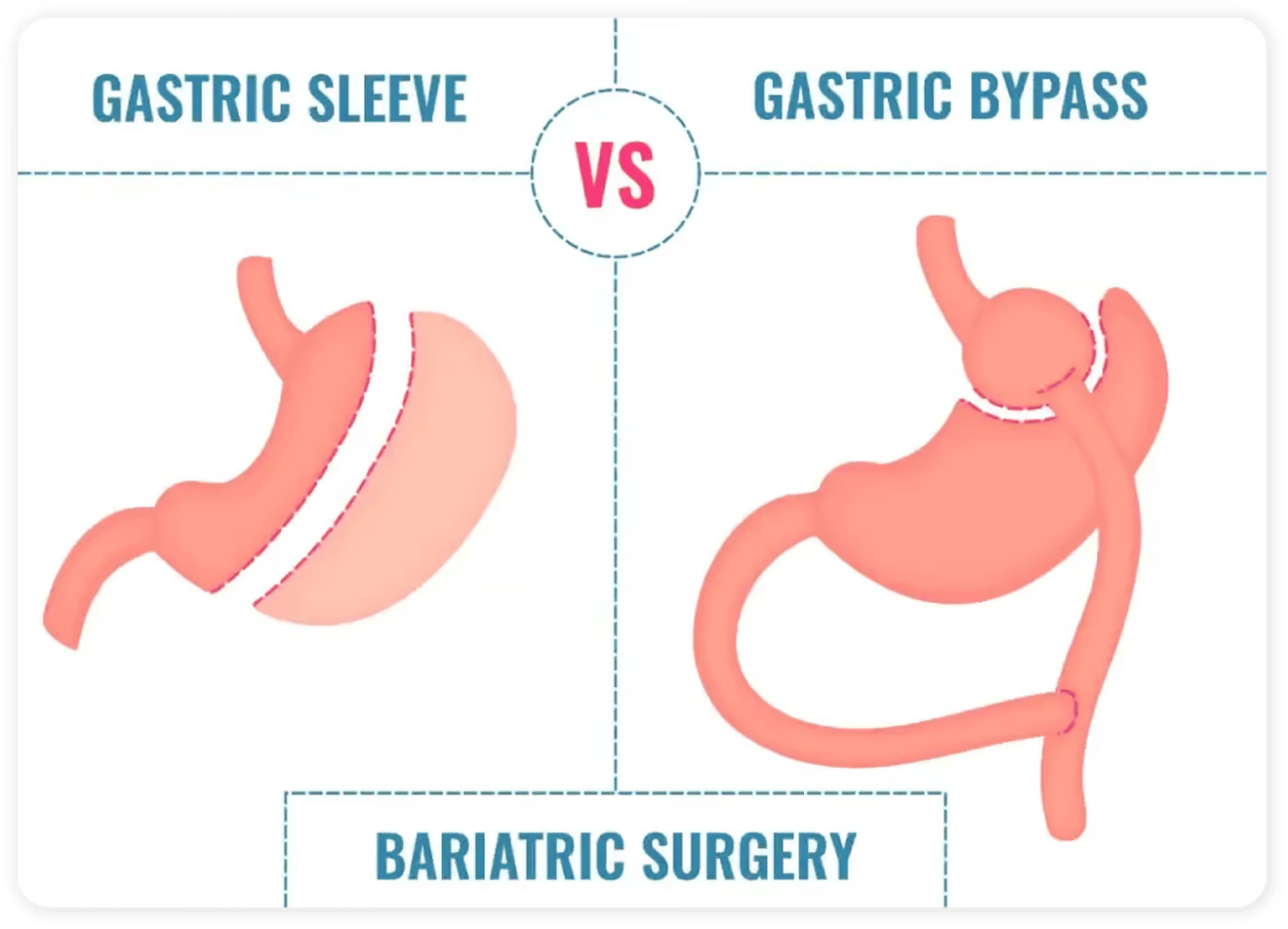
Gastric Sleeve Vs Gastric Bypass Surgery, what is the difference?
Gastric Sleeve Surgery
This procedure involves removing a large portion of the stomach to create a narrow, tube-like "sleeve," which limits how much you can eat and reduces hunger hormones.
Gastric Bypass Surgery
The bypass surgery creates a small stomach pouch and reroutes it to a part of the small intestine.This modification reduces both food intake and nutrients absorption.
Which procedure is right for you?
While both options deliver excellent weight loss results, the "right" choice depends on your unique health profile. Our surgeons evaluate your medical history and weight loss goals to recommend the specific procedure best suited for your individual condition.
How Much Does Gastric Sleeve Surgery Cost?
Our transparent pricing model is built on the essential components of care:
Details
- Full medical consultation and pre-operative assessment
- Surgeon and anesthetist fees
- Required medications and laboratory investigations
- 1-2 nights clinic stay with 24/7 professional medical supervision
- Personalized nutrition plan and one-year medical & dietary follow-up
- Access to a patient support community and bariatric team
Exclusions
- Monthly vitamins and supplements after surgery
- Additional diagnostic tests (if clinically required)

Transparent Package Price
$5,810 (KES 750,000)
Effective Weight Loss Programs in Nairobi
Do you have questions or concerns about bariatric surgery? Talk to globally renowned surgeon, Prof. Almantas Maleckas
Request a Callback

Gastric Sleeve Questions, Answered
Evidence-based answers to the questions we hear most about gastric sleeve surgery.
- Hospital stay: Most patients go home after about 1-2 days post-procedure for a laparoscopic sleeve gastrectomy.
- Return to routine daily activity/work: Many sources say 2-4 weeks; for example, one centre indicates most people return to work or normal routines in 5-10 days, but note this will depend on job demands and health status.
- Feeling "fully back to normal": Many providers advise allowing about a month before expecting to feel quite like yourself and tolerating full capacity work/activity.
- Dietary progression: Typically fluids first, then soft foods, then more solid foods over weeks/months.
Summary: From surgery to general recovery is a few weeks; full adaptation may take a month or more. The key is that as the body heals, diet, activity and follow-up must progress carefully.
- Irreversibility: A large portion of the stomach is removed, so the procedure is essentially permanent.
- Less malabsorptive effect compared to bypass: Because intestines are not rerouted, the sleeve may provide somewhat less weight loss/less metabolic effect than some bypass procedures.
- Potential for complications: e.g., staple line leaks, bleeding, infection, etc.
- Risk of worsening or new gastro-oesophageal reflux disease (GERD): Studies show sleeve can lead to or worsen reflux.
- Potential for weight regain/inadequate weight loss if lifestyle changes aren't maintained, or if anatomical changes (dilation) occur.
- Nutritional deficiencies: Although less than with bypass, still possible given stomach size and intake reduction.
In short: While the sleeve is less complex than some operations, it still carries surgical risk, lifelong lifestyle and nutritional commitments, and trade-offs (e.g., irreversibility, potential reflux, risk of regain).
Weight itself is not the sole criterion — eligibility typically uses BMI, comorbidities, prior weight-loss efforts.
- Standard guideline: Adults with BMI ≥ 40 kg/m² (severe obesity) OR BMI ≥ 35 kg/m² plus at least one serious obesity-related condition (e.g., type 2 diabetes, sleep apnoea, hypertension).
- Some guidelines now allow BMI ≥ 30 with metabolic disease (for metabolic/bariatric surgery) in selected cases.
So 'minimum weight' is variable and context-dependent: For example a tall person may weigh much more for a given BMI than a shorter person, and local health-system criteria differ.
Pain experience varies by individual, surgical technique, and post-operative management. The good news is that in modern laparoscopic practice pain is generally moderate and well controlled.
- Most patients report mild to moderate discomfort around the incision sites and some upper abdominal/shoulder referred discomfort (from gas used during laparoscopy).
- One study comparing laparoscopic vs robotic sleeve showed lower opioid use and lower pain scores in the robotic group immediately post-op, though by discharge pain levels were similar.
- Pathophysiology: part of the discomfort comes from the anatomical change (smaller stomach, residual gas, handling of tissues) rather than just incisions.
In practice:
- Expect pain for the first 1-3 days to be more significant (managed with analgesics).
- By 1-2 weeks many patients have minimal pain/discomfort, especially with mobilisation.
- Encourage early ambulation, breathing exercises, and wound care to minimise pain and complications.
Yes - while the stomach can't regrow as before (because much of it is removed), stretching/dilation of the remaining stomach (the sleeve) can occur over time, which may allow increased intake and reduce the restrictive effect.
- Evidence: Long-term outcome studies indicate that after a few years patients may regain weight partly due to dilation or adaptation.
- Anatomical dilation means the tubular sleeve may widen, reducing the restrictive effect, and patients may tolerate larger volumes again.
- Because the procedure is permanent and irreversible, the potential for adaptation means that the surgical 'restriction' effect alone is not guaranteed lifelong - the lifestyle component remains crucial.
Rather than "never," a more accurate framing is "you will need lifelong changes and certain precautions." There are no absolute bans for everyone, but the following are strongly advised:
- Overeating/very large meals: Because capacity is reduced and risk of stretching or discomfort is real, patients must eat smaller portions and slower.
- High-volume "fast" eating or drinking large fluids with meals: Can lead to discomfort, vomiting, stretching of sleeve, or reduced weight-loss.
- Ignoring dietary guidelines and nutritional supplementation: Lifelong vitamin/mineral supplementation is typically required.
- Neglecting follow-up: Lifelong monitoring with bariatric team, nutritionist and possibly psychological support.
- Using the surgery as a "permission" to eat freely: The procedure is a tool — success depends on continued behaviour change.
From a broad population standpoint, the data suggest that sleeve gastrectomy has a lower short-term risk of mortality and major complications than the classic Roux‑en‑Y Gastric Bypass, but with trade-offs.
- A large US Medicare cohort found that at 5 years, sleeve gastrectomy had lower cumulative incidence of mortality (4.27% vs 5.67%) and complications than bypass.
- Another source states "long-term, sleeve gastrectomy carries less risk of death and complications" for certain populations.
- However: the same studies indicate patients with sleeve may have higher risk of subsequent re-intervention/revision than bypass.
- Bypass may deliver somewhat greater weight loss or greater metabolic effect (especially in type 2 diabetes) in select patients, but with higher surgical complexity and nutritional risk.